
Photos & Videos
Refine Your Search
Time
Wildlife
community
The Lewa Wildlife Conservancy serves as a refuge for endangered species. The Conservancy hosts an immense range of diversity. There are over 400 species of birds and 70 species of mammals on Lewa. Below is a photo library which will show you some of the magnificent wildlife and bird life. If you would like to contribute some of your own photos for the library, please contact elodie@lewa.org.
Rhino
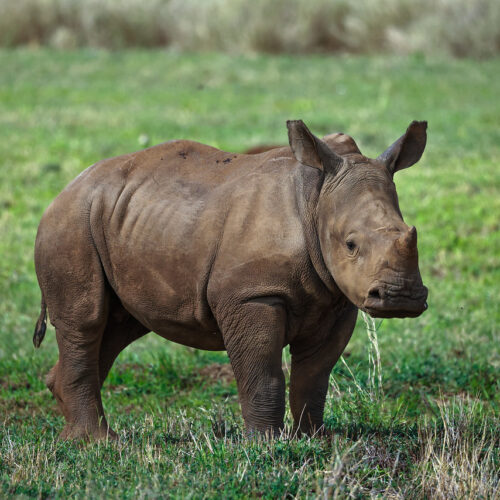
Southern White Rhino (Ceratotherium)The white or square-lipped rhino is one of two rhino species in Africa. It in turn occurs as two subspecies, the southern and the northern. The southern dwindled almost to extinction in the early 20th century, but was protected on farms and reserves, enabling it to increase enough to be reintroduced. The northern white rhino has recovered in Democratic Republic of Congo from about 15 in 1984 to about 30 in the late 1990s. This population, however, has recently been severely threatened by political conflict and instability. White rhinos live in savannas with water holes, mud wallows and shade trees. Lewa currently has 46 southern white rhino on the Conservancy.
|
Rhino
Lion LookingLions are found in savannas, grasslands, dense bush and woodlands.The lion is an exception to the usual solitary existence of most cat species. In the past lions lived in most parts of Africa, but are now confined to the sub-Saharan region. Habitat loss and conflicts with humans are the lions greatest threat.
Lewa currently has 19 known lion on the Conservancy.
|
Rhino
Young Lions PlayingLions are found in savannas, grasslands, dense bush and woodlands.The lion is an exception to the usual solitary existence of most cat species. In the past lions lived in most parts of Africa, but are now confined to the sub-Saharan region. Habitat loss and conflicts with humans are the lions greatest threat.
|
Rhino
Southern White Rhino (Ceratotherium)The white or square-lipped rhino is one of two rhino species in Africa. It in turn occurs as two subspecies, the southern and the northern. The southern dwindled almost to extinction in the early 20th century, but was protected on farms and reserves, enabling it to increase enough to be reintroduced. The northern white rhino has recovered in Democratic Republic of Congo from about 15 in 1984 to about 30 in the late 1990s. This population, however, has recently been severely threatened by political conflict and instability. White rhinos live in savannas with water holes, mud wallows and shade trees. Lewa currently has 46 southern white rhino on the Conservancy.
|
Rhino
Elephant & CalfThe African elephant is the largest living land mammal. Elephants are gregarious and form small family groups consisting of an older matriarch and several generations of relatives. In recent years, it has become increasingly difficult for elephants to live outside protected parks as they are pressured by poachers and by the habitat loss that comes with increasing human settlement. Lewa currently has 240 elephants but this fluctuates seasonally.
|
Rhino
Reticulated Giraffe (Giraffa camelopardalis reticulata)The Somali Giraffe or Reticulated Giraffe, is a subspecies of giraffe native to Somalia, but is also widely found in Northern Kenya and Southern Ethiopia. Reticulated giraffes can interbreed with other giraffe subspecies in captivity or if populations are low in the wild. The reticulated giraffe is the most well-known of the nine giraffe subspecies, and is by far the giraffe most commonly seen in zoos. Its coat consists of large, polygonal liver-colored spots outlined by a network of bright white lines. The blocks may sometimes appear deep red and may also cover the legs. The extraordinary height of giraffes allows them to feed from the branches of trees that other hoofed animals can't reach. Lewa currently has 252 giraffe on the Conservancy
|
Rhino
Elephants on LewaThe African elephant is the largest living land mammal. Elephants are gregarious and form small family groups consisting of an older matriarch and several generations of relatives. In recent years, it has become increasingly difficult for elephants to live outside protected parks as they are pressured by poachers and by the habitat loss that comes with increasing human settlement. Lewa currently has 240 elephants but this fluctuates seasonally.
|
Rhino
Bateleur Eagle (Terathopius ecaudatus)The Bateleur is a medium-sized eagle in the bird family Accipitridae which also includes many other diurnal raptors such as buzzards, kites and harriers. It is the only member of the genus Terathopius and probably the origin of the "Zimbabwe bird", national emblem of Zimbabwe. This is a common resident species of the open savanna country in Sub-Saharan Africa. It nests in trees, laying a single egg which is incubated by the female for 42 to 43 days, with a further 90 to 125 days until fledging. Bateleurs pair for life, and will use the same nest for a number of years. Unpaired birds, presumably from a previous clutch, will sometimes help at the nest.
|
Rhino
Elephants on Mount KenyaThe African elephant is the largest living land mammal. Elephants are gregarious and form small family groups consisting of an older matriarch and several generations of relatives. In recent years, it has become increasingly difficult for elephants to live outside protected parks as they are pressured by poachers and by the habitat loss that comes with increasing human settlement. Lewa currently has 240 elephants but this fluctuates seasonally.
|