
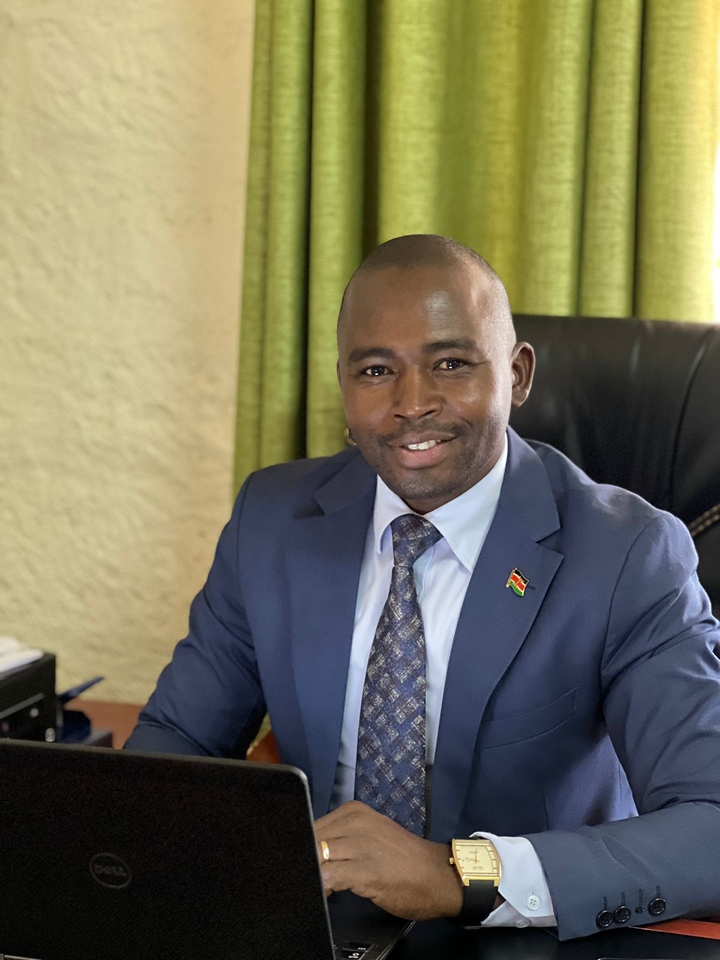
How John Kinoti Became Lewa’s First CPPO
When you grow up on the slopes of Mt Kenya, the land shapes your perspective long before you enter a classroom. For Lewa’s outgoing Chief Programmes and Partnerships Officer (CPPO), John Kinoti, that connection to the landscape, paired with a drive to make a real difference, became the foundation for a 22-year career in community-centric conservation.
Joining Lewa at just 23 years old with a degree in economics and community development, Kinoti set out to build programmes that directly serve local communities. As he prepares to transition to his next chapter, he reflects on his journey, the milestones achieved along the way, and his message for the future.
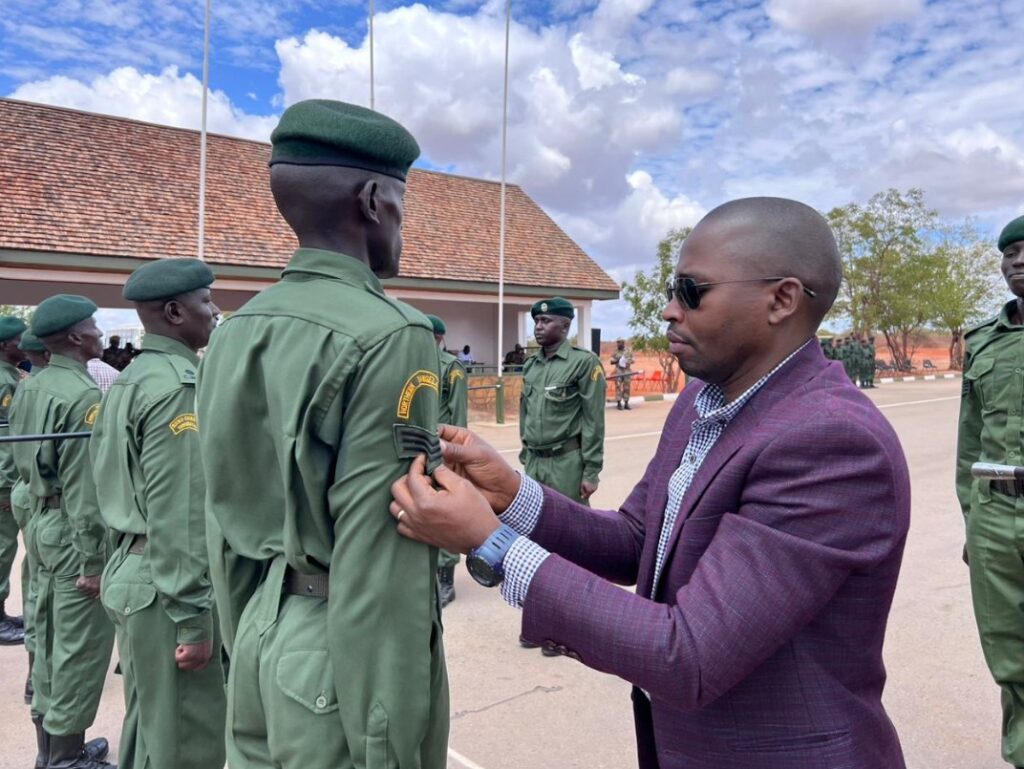
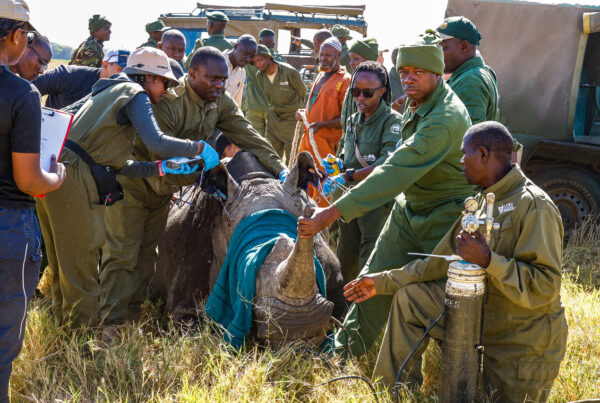
rangers as they graduated from the Kenya Wildlife Service (KWS) Law Enforcement Academy.
Rooted in the Landscape: The Early Days
The journey started in 2004. Equipped with his degree and eager to do meaningful work, Kinoti joined Lewa as Community Development Office Manager after following up on a lead from his Kisima Farm internship. His momentum was immediate: right after the Northern Rangelands Trust (NRT) was officially inaugurated, Lewa seconded him to help build it. Working as one of NRT’s first three founding employees, he spent three months getting the fledgling organisation off the ground.
Once that initial rollout concluded, Kinoti returned to Lewa with a broader perspective on landscape-scale conservation. His immediate task was to rewrite and rebuild Lewa’s own community development programme dream from scratch. Over the years, that initial one-man operation grew into a core department. By 2022, after years of running grassroots initiatives as manager, Kinoti stepped up to become Lewa’s first Chief Programmes and Partnerships Officer.
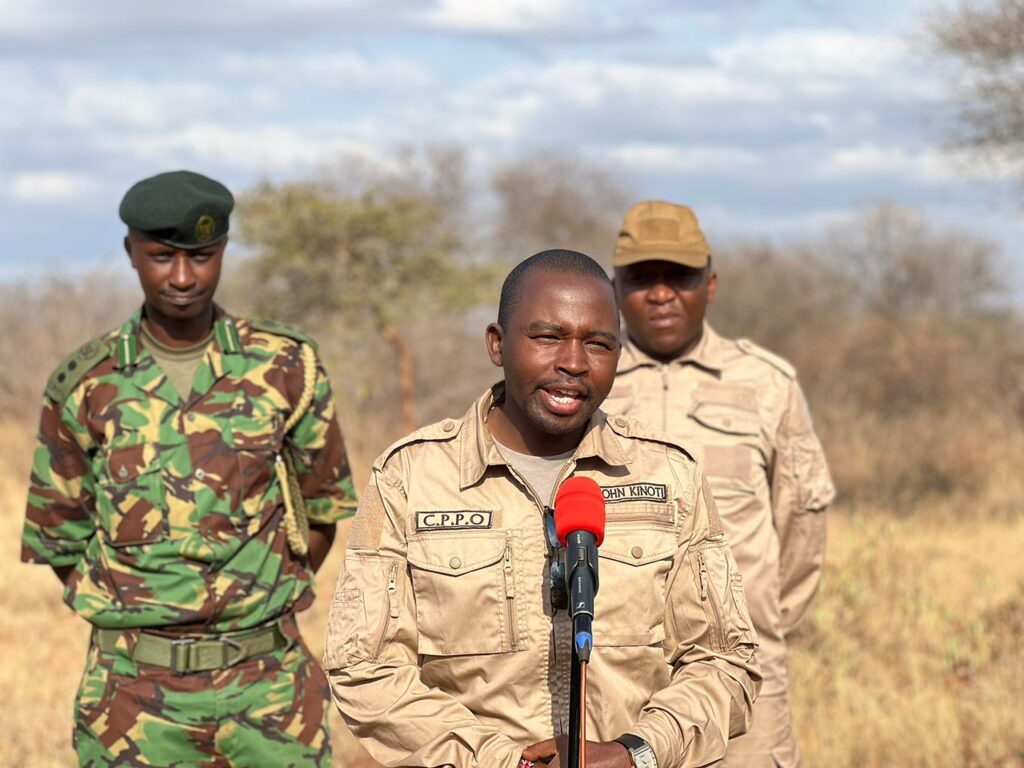
Over Two Decades of Measured Growth
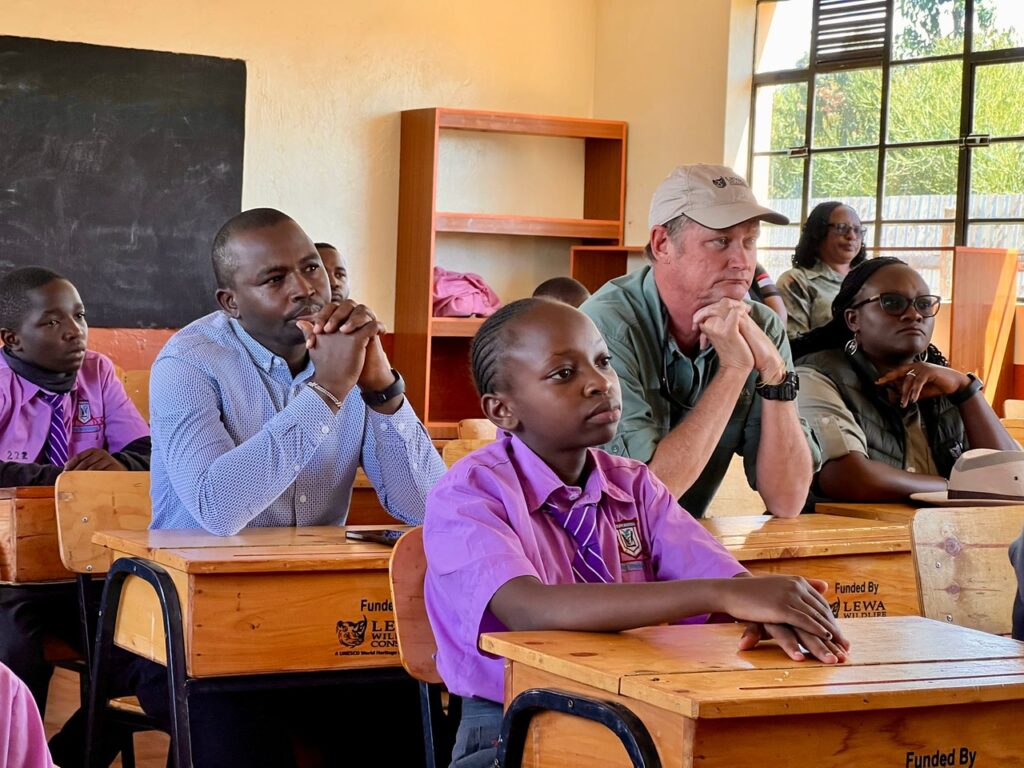
Building community development at Lewa took personal accountability, practical standards, and steady discipline. Looking back over more than two decades, the numbers show the scale of that growth. What started as a single-position role expanded into a department of over 30 staff members spanning the Lewa Education Programme and Community Development Programme. Water projects grew from 3 to 18 across local communities, and support for local women’s groups scaled from 3 to 42 active groups today. In addition, the team established Community Forest Associations across 4 major forest areas and expanded school support from 4 to 29 institutions.
“I am happy to have been part of the growth from a one-man department to now over 30 strong staff,” he noted. “This was anchored on self-leadership, responsibility, discipline, vision, and standards.”
Bringing the Mountain Bongo Home
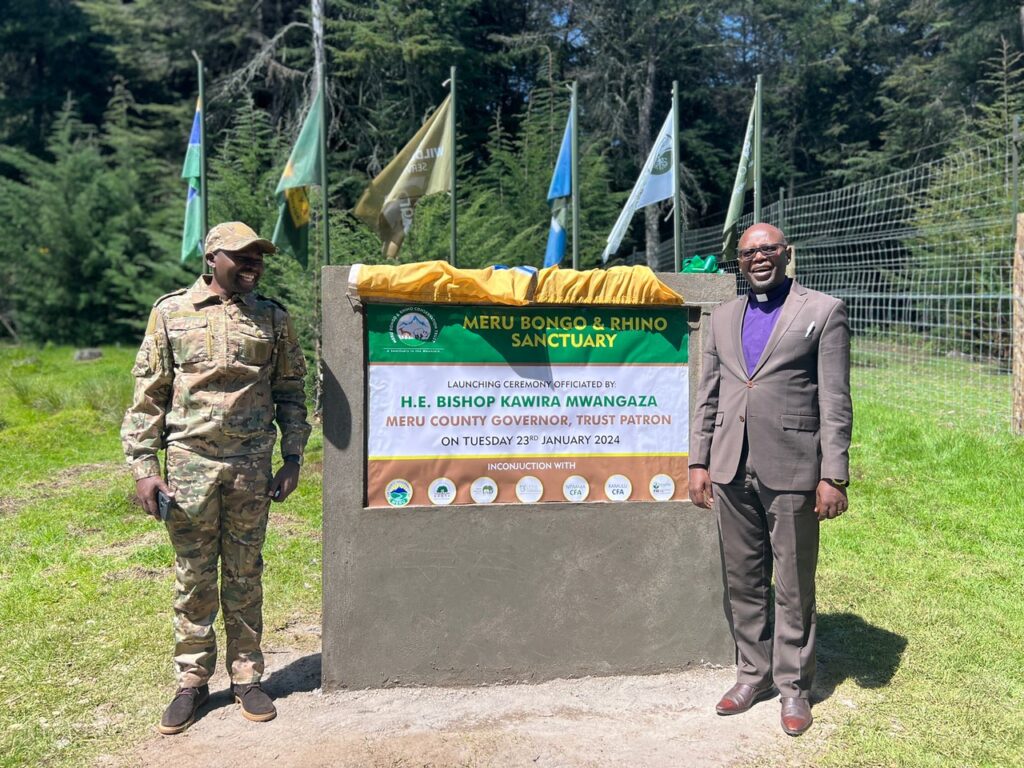
Among these milestones, one achievement stands out: leading the inception of the Meru Bongo and Rhino Conservation Trust (MBRCT). Backed by Lewa as a core institutional partner, Kinoti served as its first chairman and helped build MBRCT into a strong public-private-community alliance. This collaboration directly enabled the return of the critically endangered mountain bongo to its native habitat.
“Among all the milestones in my career, establishing MBRCT from the ground up as its first chairman stands out the most, especially witnessing the return of the iconic Mountain Bongo,” he shares. “My next hope is to see the black rhino back on Mt. Kenya, even while serving in Parliament.”
Also Read: Mountain Bongos Return to Mount Kenya
Lessons in Partnerships
Reflecting on the success of Lewa’s community programmes and the return of the mountain bongo, Kinoti points to one decisive factor: strong partnerships. Work on the ground relies entirely on deep collaboration between communities, governments, donors, and non-profits, and decades in the field offer straightforward lessons on keeping those efforts moving forward.
“We have to be audacious, visionary, transparent, and resilient,” he emphasised. “Lasting impact is always driven by how well you manage people, policies, and politics, and you cannot be afraid to fail, because failure is part of success.”
Guidance for Young Conservationists
To those ready to shape the future of wildlife and communities, Kinoti offers three core principles for lasting impact: accept mentorship, hold fast to your values, and drive change responsibly. Real progress takes discipline, accountability, and unyielding personal standards. While the field needs bold ideas to challenge the status quo, the most transformative work happens when fresh energy is paired with patience and respect for history.
“You are hugely needed, but you must allow yourselves to be nurtured and mentored,” he advised. “As the young generation challenges the status quo, let them also be patient to learn from the history of those who came before them.”
As Kinoti prepares for his next chapter, his message to Lewa’s supporters, donors, and community remains grounded in pride for the institution. Lewa continues to be a solid, dependable place to invest in conservation and community development, operating as both a catalyst for local progress and a practical model for what works on the ground. Moving forward means keeping up that momentum through Lewanacity, the steady, persistent effort that keeps long-term conservation alive.
”Lewa is one of the safest institutions to invest in to support conservation and community development,” he concluded. ”It is not only the catalyst of development but also a catalogue of transformative programmes. We must maintain the spirit of LEWANACITY.”